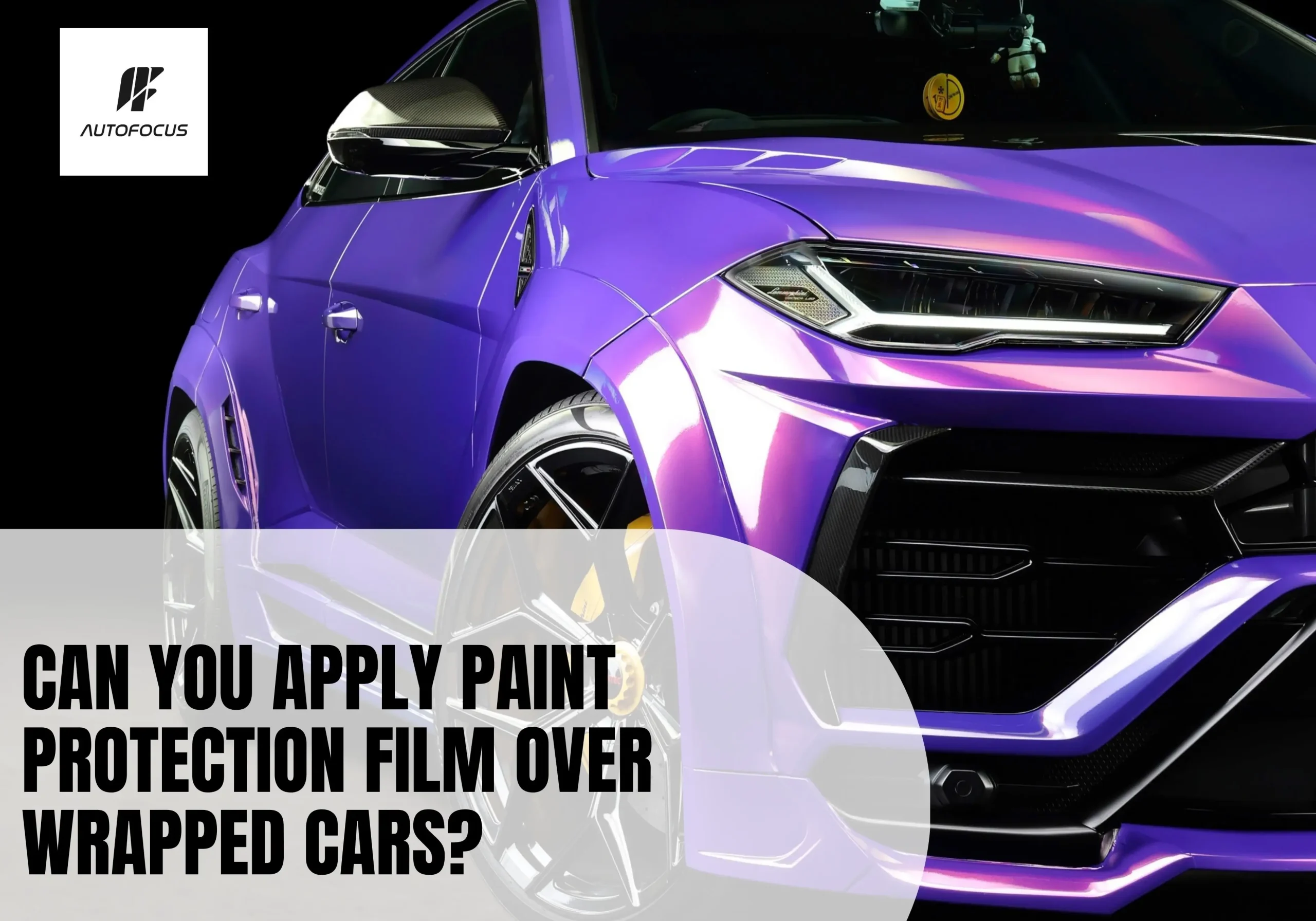
Yes, paint protection film can be applied over wrapped cars — but only under the right conditions. The wrap must be smooth, fully adhered, and free of lifting edges or contaminants before applying paint protection film over wrapped cars.
Here’s what matters before combining the two:
- PPF and vinyl wraps serve different purposes — one protects, one transforms
- Layering them is possible, but surface preparation is critical
- Not all wrap materials are compatible with PPF adhesive
- Professional assessment is strongly recommended before proceeding
What Is Paint Protection Film and How Does It Work on Wrapped Cars?
PPF and vinyl wrap get lumped together constantly — same showrooms, same cars, similar price brackets. They’re engineered for entirely different purposes, and that gap matters the moment layering enters the conversation.
Understanding Paint Protection Film (PPF)
Paint protection film is a clear thermoplastic urethane film that sits between the car’s surface and whatever the road throws at it — chips, scratches, bird acid, UV. Modern PPF includes self-healing technology, where minor abrasions disappear with heat.
The bond comes from a pressure-sensitive adhesive, so what’s underneath is the actual starting point. Different
types of paint protection film offer varying levels of durability, clarity, and self-healing performance. High-quality PPF is specifically engineered to help
protect against scratches, stone chips and UV damage.
What Makes a Car “Wrapped”?
A wrapped car has vinyl film over the factory paint — applied to shift the colour, lay down a custom finish, or put something between the clearcoat and daily wear.
The vinyl sits on top of the clearcoat, held by its own adhesive. It’s an aesthetic product, not an impact barrier. If you’re considering a vehicle wrap, it’s worth understanding
what to consider before wrapping your car in Sydney before adding another protective layer.
PPF vs. Vinyl Wrap — The Core Distinction
PPF is thicker, purpose-built for protection, and designed to take punishment. Vinyl is thinner and built for appearance.
When layering, PPF goes over the wrap — the wrap becomes the base, the film the outermost layer. That order matters before any decision gets made. That order matters before any decision gets made. If you’re unsure which option suits your vehicle, see our guide on
whether you should get vinyl film or PPF.
Can You Really Apply Paint Protection Film Over Wrapped Cars?
The answer is yes — but the wrap’s condition, age, and material all have a say before any film goes near it.
When It Works
PPF applies successfully over wraps that are clean, fully adhered, and free of bubbles, peeling, or contamination. The wrap should have a few days of cure time on it.
Cast vinyl with a smooth, flat finish is the most compatible — textured finishes complicate adhesion from the start.
Red Flags That Rule It Out
A worn wrap isn’t a candidate. Lifting edges, bubbles, and delamination get sealed in, not fixed. Textured and metallic flake finishes work against even adhesion and reduce the film’s optical clarity.
Wraps nearing the end of their service life should be replaced, not covered. In some cases, proper
vinyl wrap removal may be the better option before applying a fresh wrap and PPF combination.
What Happens to the Wrap Underneath?
The wrap is largely preserved under PPF — shielded from UV, abrasion, and environmental contamination. If the film ever needs removal, the wrap beneath can be affected, particularly with calendered vinyl or an older install.
This added protection can help extend the lifespan of a wrap, especially when compared to the typical service life discussed in our guide on
how long vinyl film lasts in New South Wales.
The Right Process — How Paint Protection Film Over Wrapped Cars Should Be Applied
What separates a result that holds for years from one that starts lifting inside a season almost always comes down to setup — not the finish.
Step 1 — Assess the Wrap’s Condition
Every edge, seam, and flat panel gets a proper check. Lifting sections, trapped bubbles, or contamination get resolved before the film comes near the car. Covering a problem doesn’t fix it — it just makes it costlier to address later.
Step 2 — Clean and Decontaminate the Surface
A rinse won’t do it. Wax, silicone, and bonding residue need to come off — a panel wipe or isopropyl alcohol solution handles that. Even trace contamination gives the adhesive a place to fail.
Step 3 — Choose a Compatible PPF
Adhesives built for hard clearcoat don’t automatically work on vinyl — the surface flexibility and tension are different, and that affects how the bond forms.
Brands like STEK and SunTek have film options suited to this application, but the right choice still depends on the specific wrap and an experienced installer reading it correctly.
Coating science treats multi-layer systems as interdependent — each layer’s properties influence the one above, and in a PPF-over-wrap setup, the vinyl’s flexibility and adhesive behaviour affect how the PPF bonds.
Step 4 — Professional Installation vs. DIY
DIY PPF is difficult compared to factory paint. Over a wrapped surface, misaligned cuts, trapped contaminants, or improper tension can damage the wrap and compromise the film.
Professional installation isn’t a convenience here — it’s protection for an investment already made.
Benefits of Applying PPF Over a Wrapped Car
Done right, the combination protects the wrap and extends its life well past what either product manages alone.
Australian Road Conditions Demand More
Gravel, road debris, and highway tar are hard on any finish — and wraps are not immune. PPF adds a physical barrier that absorbs stone chip impact before it reaches the vinyl beneath.
Holding Colour and Finish for Longer
A vinyl wrap is a significant investment. Without protection, it takes the same environmental punishment as bare paint. PPF acts as a sacrificial layer, holding colour depth and surface finish for longer.
UV Protection in Australia’s Climate
Research on PVC film degradation confirms that prolonged UV and heat exposure accelerates surface breakdown in polymer films. In Australia — where UV index readings sit in the extreme range for much of the year — PPF provides that outer protective barrier.
Risks and Limitations Worth Knowing
Premium materials handled without the right experience still produce a poor result. Miscut edges, sealed-in contamination, and uneven tension are common outcomes when this job is attempted without proper grounding in both products.
Adhesion Issues and Wrap Damage
Vinyl sits differently under PPF adhesive than clearcoat does. Surface variation, softness, or inconsistency in the wrap prevents even bonding, and edge gaps don’t stay dry.
Once moisture finds a way in, the failure spreads. A poor installation that later needs removal can cause the wrap underneath to delaminate.
Self-Healing Performance Over Textured Wraps
Self-healing PPF relies on the film lying flat so heat can work evenly. Over a textured wrap, that doesn’t happen consistently — reducing effectiveness. Matte and satin finishes are especially difficult.
Cost Considerations
Combining PPF and vinyl wrap is not a budget option.
The total reflects two premium products, professional installation, and extra preparation time. For high-value vehicles or significant custom wraps, it’s typically justifiable. For standard wraps on daily drivers, the value equation deserves careful thought.
Paint Protection Film Over Wrapped Cars in Australia
Australia’s UV intensity and road conditions make this combination more practical than it might sound anywhere else.
Why More Australian Owners Are Combining the Two
Materials science research on
polyurethane-based coatings identifies their value as protection systems balancing flexibility, adhesion, and durability — properties that matter in climates running hot and UV-heavy most of the year.
One layer has real limits here, and more owners are working that out before the damage shows up.
Finding the Right Specialist
Not every detailing shop has experience applying PPF over vinyl. It’s a specialist application, and the gap between competent and experienced shows within months.
What to Ask a PPF Installer Before Booking
Here are three crucial things to ask your chosen PPF installer:
- Has the installer applied PPF over wrapped cars, and can they show examples?
- Which PPF brands do they use, and are those compatible with vinyl?
- What does their preparation process involve?
Those answers separate specialists from generalists quickly.
Frequently Asked Questions About Paint Protection Film Over Wrapped Cars
These are the questions that come up before most installs. Answered straight.
Can you apply PPF over a matte vinyl wrap?
It’s doable, but the margin for error is tighter than on gloss. Some adhesives don’t sit well on matte finishes, and self-healing performance drops over uneven texture. The specific wrap needs to be assessed before any film is selected.
Will PPF damage my wrap when removed?
It can, depending on the wrap’s age, condition, and removal method. Heat removal significantly reduces the risk. Cold removal is a reliable way to cause damage.
How much does it cost in Australia?
Cost varies by vehicle size, coverage area, and PPF product. Layering over a wrap adds preparation time. A quote from a reputable installer is the most reliable starting point.
How long does PPF last over a vinyl wrap?
Longevity depends on preparation and installation quality. A professional install over a well-conditioned wrap can achieve strong durability — comparable to PPF over factory paint when done correctly.
Does it affect resale value?
Generally yes, positively. A well-maintained wrap presents better than a degraded one. Buyers of prestige vehicles increasingly recognise documented protection.
You’ve Invested in Your Wrap. Now It’s Time to Protect It Properly With Autofocus Solution
A custom wrap is one of the most visible investments made in a vehicle. Leaving it exposed to stone chips, UV, and Australian road conditions isn’t a great return.
At
Autofocus Solution in Banksmeadow, Sydney, the team works with STEK and SunTek PPF and has the experience to assess whether your wrap is a suitable candidate for application.
If it is, the installation will be done properly from prep through to edge finishing. Reach out for an
obligation-free consultation, and let’s keep that finish looking the way it did the day it left the workshop.
