
You’ve psyched yourself up to finally strip that vinyl wrap off your car—and then it happens. The paint underneath is completely rooted. Clearcoat flaking off in chunks, weird discolouration everywhere, maybe even bare panels where your shine used to be. It’s the sort of disaster that haunts you at 2 am, especially if that wrap’s been baking under the Australian sun for years.
The good news? Removing a wrap without damaging paint is absolutely possible. But here’s the catch: You’ll be threading a fine line between doing it right and turning your vehicle into an expensive restoration project.
What’s Secretly Destroying Your Paint While Your Car Sits Wrapped?
Paint Condition Matters More Than You Think
Here’s something that catches most people off guard: the condition of the paint before the wrap even went on determines how smoothly removal will go. Factory paint that’s been properly cured and maintained? Usually handles wrap removal like a champ. But repainted panels or dodgy touch-up jobs from a previous owner? You can run into serious trouble. Fresh paint hasn’t always bonded properly to the panel underneath (and if that wrap’s adhesive is stronger than the paint’s grip), you’re going to peel off more than just vinyl when it comes off.
Why Wrap Age Can Make or Break Your Paint Job
Time changes everything, including how that wrap behaves when it’s time to come off. Fresh wraps (anything under three years) usually come off without a fight. The adhesive releases cleanly, and you’re done. But push past five years? That’s when things get unpredictable.
But that glue? It either goes brittle and flakes off in a sticky disaster. Or bonds so tight to the clearcoat you can’t tell where one ends and the other starts. Tough spot either way. And wraps left on for seven or eight years? They’re essentially part of the paint system now.
The Temperature Factor Australian Car Owners Can’t Ignore
Living in Australia means your car’s fighting a losing battle against the weather, with most owners not realising how bad it gets. The relentless UV, wild temperature swings, and humidity don’t just fade your wrap. They’re actively breaking down the adhesive and clearcoat at a chemical level.
Research into paint durability confirms what detailers already know: conditions mimicking Sydney summers or Brisbane’s sticky heat cause structural changes in the coating layers beneath your wrap. And if you’re parked near the coast—Maroubra, Kensington, La Perouse—that salt spray speeds things up. Your wrap and paint break down quicker than any warranty expects. So, when removal time comes? The damage might already be done.
The Proven Vinyl Wrap Removal Method That Protects Your Investment
Step 1: Inspect Your Paint Before You Start
Before touching that wrap, a thorough inspection reveals potential problems waiting to happen. Look for lifting edges, areas where the wrap’s already separating, or discolouration suggesting moisture intrusion. Check for paint chips or damage visible through the wrap. This assessment determines whether DIY removal is even advisable.
Step 2: Heat Application—The Make-or-Break Technique
Nail the heat, or watch your paint suffer. Target 60-80°C, where it’s enough to loosen the glue without scorching the surface underneath. Grab a solid heat gun with temp controls; it’ll beat a hairdryer hands down. Sweep it steadily, 15-20cm back, tackling one patch at a time. Overdo the heat, and you’ll surely blend adhesive right into the clearcoat. Go too cool, and the wrap just shreds apart instead of lifting cleanly.
Step 3: The 45-Degree Peel Method Explained
Angle matters more than most people reckon. Pull the wrap back at a 45-degree angle and you’ll see why this works for pros. Start from a corner, warm it up, then peel slowly and steadily at that same angle. Feel resistance building? Stop right there, add more heat, and keep going. It’s all about patience. Why? Rushing leads to tears, both in the wrap and potentially your paint.
Step 4: Adhesive Residue Removal Without Damage
Even when it goes perfectly, bits of glue still stick around. But so does isopropyl alcohol—or better yet, an automotive-specific remover. So, dip a microfibre cloth, then rub gently in circles over small spots. Harsh stuff like acetone? Steer clear of it since it eats right into your clearcoat. That stuff will wreck your clearcoat faster than you can say “expensive respray.”
Step 5: Post-Removal Paint Protection
Once the wrap’s off, protect that paint straight away. Start with a solid wash to ditch lingering residues. Then, clay bar it to lift stubborn grime. From there, ceramic coating or paint protection film offers far superior protection than the original wrap ever did, especially given what Australia’s climate can dish out.
When Your Heat Gun Becomes Your Worst Enemy
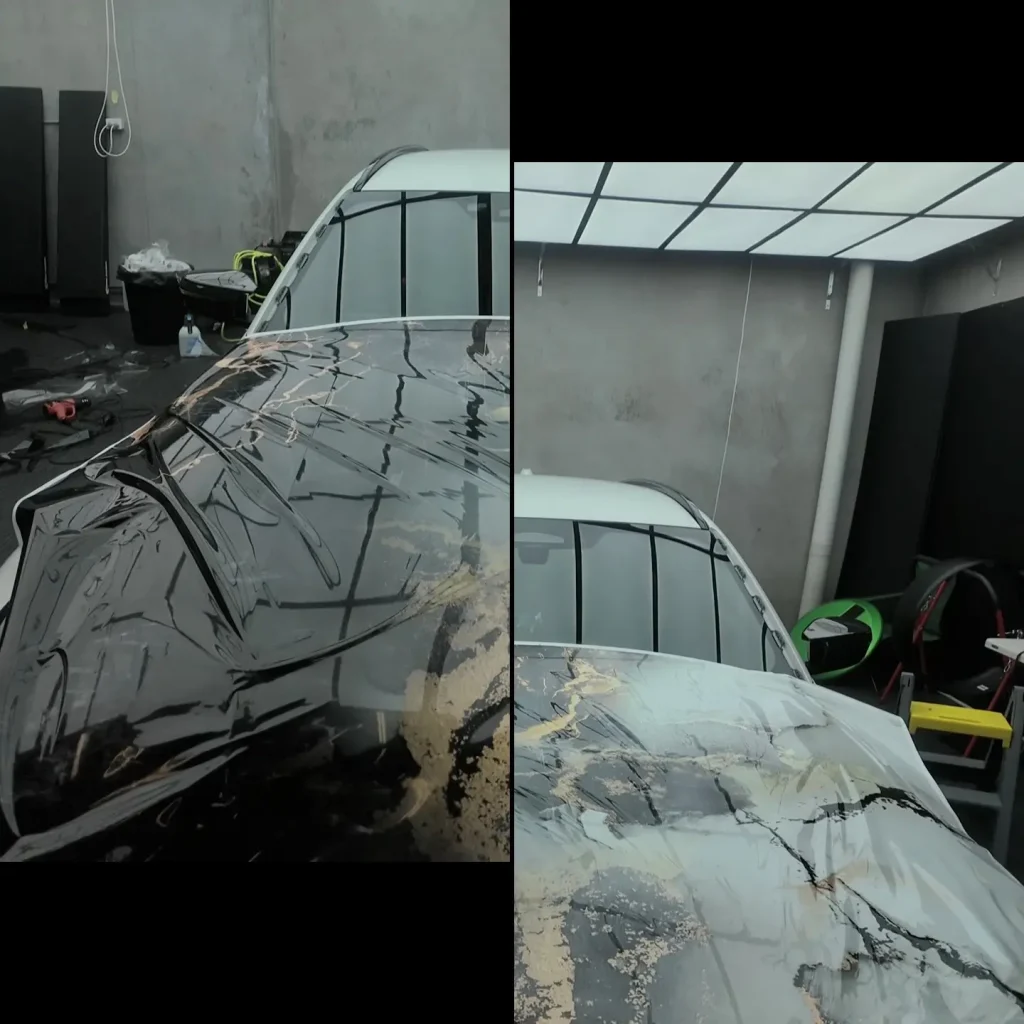
Some situations scream for professional intervention. Once a wrap hits the five-year mark, especially if it’s sun-baked and brittle, you’re looking at trouble without professional gear. And if your paint’s already sketchy underneath? Chips, dodgy resprays, deep scratches? DIY removal will likely make things worse, not better.
Incorrect wrap installation, where the installer wrapped edges too tightly, creates nightmare removal scenarios. And honestly, if the wrap’s on complex curved surfaces like bumpers or mirrors, the risk of heat damage or paint pulling increases dramatically.
Why Smart Car Owners Never Gamble With DIY Removal
Advanced Tools and Techniques You Don’t Have at Home
Professional wrap removal operates on a completely different level than home DIY attempts. Research into paint and coating removal processes reveals that temperature control during removal requires precision that consumer-grade heat guns simply can’t deliver. Professional systems maintain exact temperatures across large surface areas, preventing the heat spikes that damage the clearcoat. The thermal methods used in professional settings—including specialised infrared heating—create controlled conditions that DIY mechanical approaches can’t replicate.
Studies examining substrate damage prevention show that laser technology and computerised temperature management systems achieve removal without compromising the underlying surface. The balance between heat application and material preservation demands equipment that monitors and adjusts in real-time, technology that costs thousands and requires training to operate effectively.
The True Cost of Paint Damage vs. Professional Service
The maths tells a sobering story. Professional vinyl wrap removal typically costs a fraction of what paint restoration runs if things go wrong. A bonnet respray alone can hit several hundred dollars. Full panel repaints or clearcoat refinishing? We’re talking thousands, easily. Meanwhile, expert removal services protect the original factory paint, preserving resale value and avoiding the depreciation hit that comes with repainted panels.
What Happens During Expert Removal That Saves Your Paint
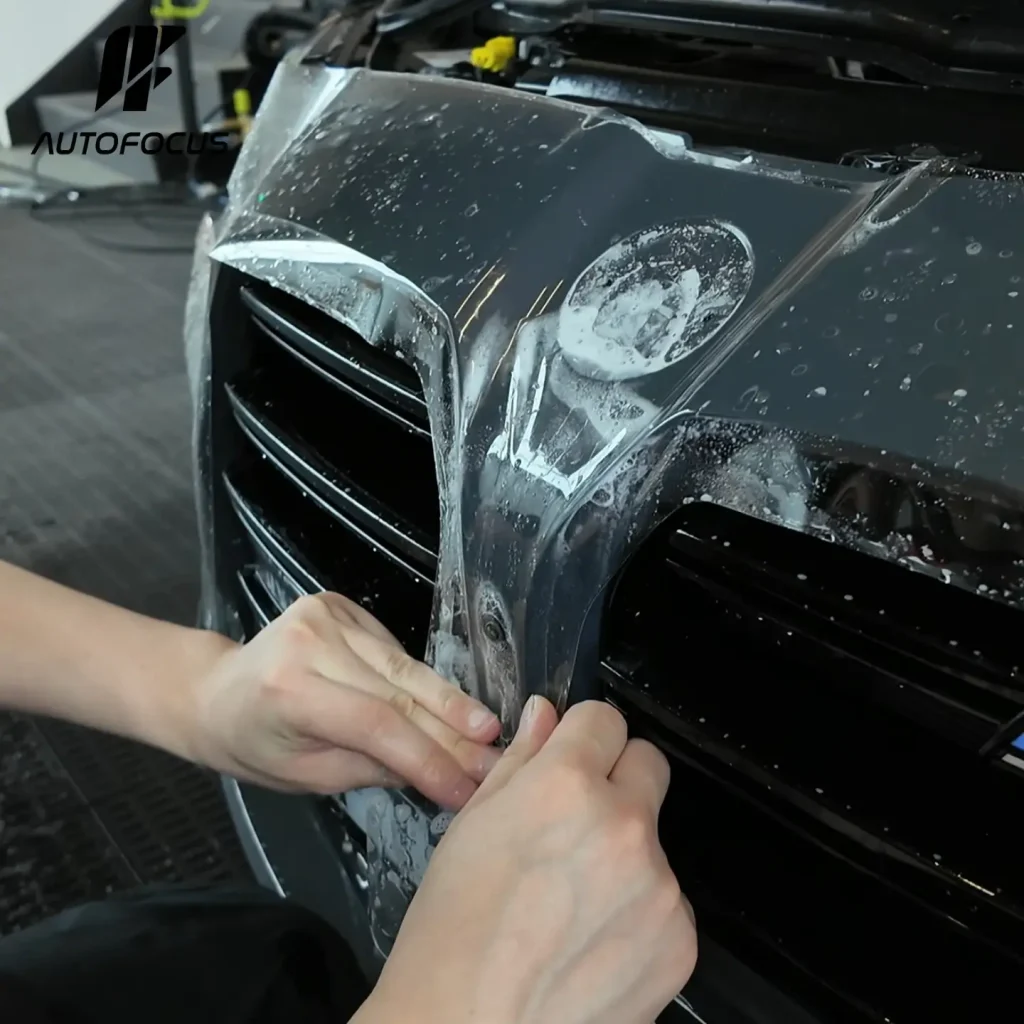
Professionals don’t just wing it but actually follow a proper system. They’ll check your wrap’s age, condition, and how it was installed before touching anything. The heating equipment they use keeps consistent temperatures across the entire panels, so the adhesive softens evenly.
And the actual peeling? It’s done with precise tension and angles, monitored the whole time to avoid stressing your paint. Finally, paint correction and protection services bring the surface back to showroom condition, which is often better than it looked before the wrap went on.
Your Next Steps
Look, removing a vinyl wrap without damaging paint is possible, but the margin for error is razor-thin, especially with Australia’s harsh conditions working against you. At Autofocus Solution, we’ve seen every scenario imaginable—from perfectly preserved paint under three-year-old wraps to clearcoat catastrophes from DIY attempts gone wrong. We’ve got the professional tools and methods to pull wraps off safely, then protect what’s underneath with paint protection film, ceramic coating, or graphene coating. These are your vehicle’s real defence against Australia’s UV and fading paint.
Want a pro check before you dive into removal? Or ready to hand it over? We’re here regardless. Set up in Banksmeadow, we handle jobs all over the Eastern Suburbs like Alexandria, Waterloo, spots like Kensington and Maroubra. Jump on a free consult via this link so we can size up your ride.