
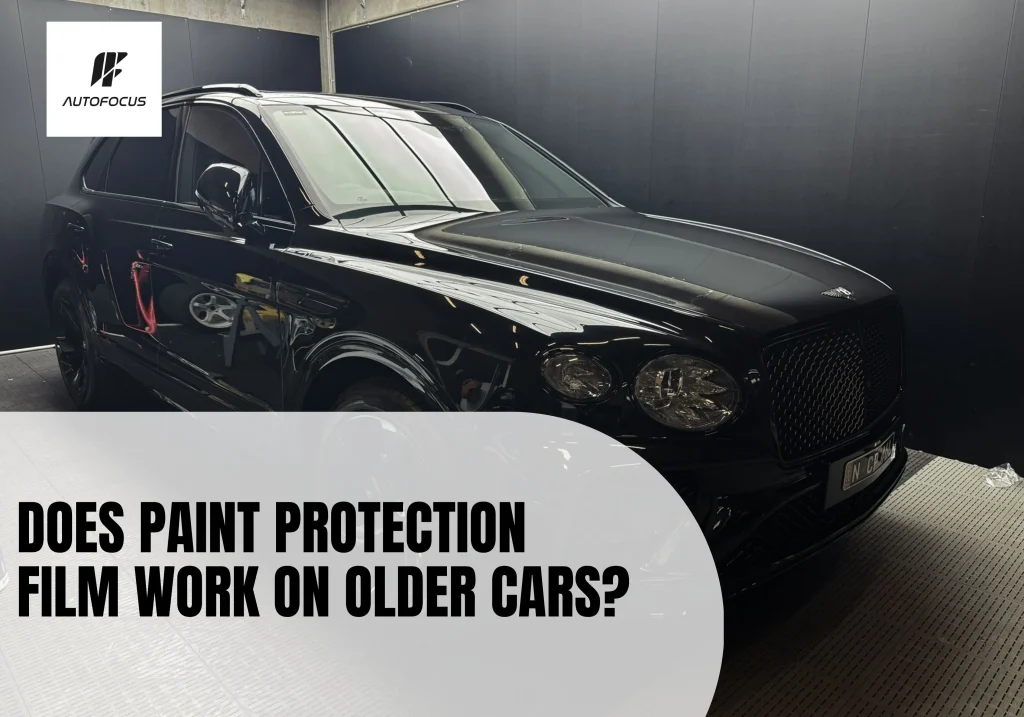
Yes, paint protection film works on older cars — but only when the existing paint is stable and properly prepared beforehand. It won’t fix existing damage, but it will stop further deterioration from UV rays, stone chips, and everyday road wear. If your car’s paint is still reasonably intact, PPF can be one of the smartest long-term investments you make.
- Works on older cars with sound, stable paintwork
- Protects against UV damage, chips, and abrasion
- Paint correction may be needed before installation
- Not suitable for peeling, failing, or heavily oxidised paint
What Is Paint Protection Film — And Why Are Car Owners Talking About It?
Most car owners have caught the term somewhere — a detailing shop, a forum thread, a mate who got it done and won’t stop going on about it. What’s less clear is what it actually does and why it’s a completely different conversation from what dealers push at handover.
How paint protection film works — and what it’s actually made of
PPF is a thin, clear film that sits directly over the painted surface. Road grit, debris, minor scrapes — they hit the film, not the paint underneath.
It follows every panel curve, and once a proper installer is done with it, most people can’t tell it’s there.
The material is thermoplastic polyurethane — TPU. According to TechSci Research, TPU is the fastest-growing segment in the global PPF market.
Flexes with the panel instead of cracking, holds optical clarity over time, and has a self-healing property that’ll come up again shortly.
How it differs from ceramic coating and car wax
Wax is gone within weeks. Ceramic coating bonds chemically to paint — real hardness, solid water-beading, genuinely useful — but a stone chip off the Hume Highway at 110 km/h doesn’t care about chemical hardness.
PPF is what physically stands between that chip and the panel. For owners comparing the strengths of each option, understanding the differences between PPF vs ceramic coating for car protection helps clarify where each product performs best.”
Can Paint Protection Film Work on an Older Car?
Age gets blamed for a lot that it didn’t cause. Plenty of owners walk away from a car that’s perfectly worth saving because they assume time has already decided things. It hasn’t.
The short answer: yes — with the right preparation
The film has no concept of the vehicle’s age. Surface condition is what it responds to — and that’s got nothing to do with how long the car’s been on the road.
How paint condition determine the outcome
A five-year-old daily driver that’s copped western Sydney summers without a garage can be a harder case than a ten-year-old weekend car that’s barely seen rain. Maintenance history and exposure matter far more than the odometer reading.
Put PPF over paint that’s already failing and the problems just get sealed under there. Get the prep right and paint protection film can genuinely add years to paintwork that still has life in it. In many cases, paint correction before PPF installation is what makes the final result look properly finished.
Good candidates typically share these traits:
- Paint still holds gloss and depth after a wash
- Clear coat intact, no peeling or bubbling at edges
- Reasonably consistent colour across panels
- Previous repairs have settled and blended cleanly
Cars that need correction work first tend to show:
- Swirl marks are clearly visible under direct sunlight
- Dull or chalky patches on the bonnet and roof
- Clear coat starting to lift near trim lines or door edges
- Fading that a wash and polish alone won’t fix
What Paint Protection Film Protects Against
The chips on the bonnet, the scratches near the door handle, that dull patch that wasn’t there last year — it adds up quietly. PPF is what stops the tally from growing by protecting against scratches, stone chips, and UV damage before permanent paint deterioration sets in.
Stone chips, scratches, and surface abrasion
Highway debris, gravel roads, the Westfield car park on a Saturday afternoon — the front bumper, bonnet, and mirrors cop it constantly. PPF takes the hit, and the self-healing layer deals with lighter marks on its own.
Trolleys, fingernails on a door edge, a bag swung a bit too carelessly — warmth triggers the film’s recovery. The surface closes up. For anyone who parks anywhere public on a regular basis, that’s worth serious thought.
UV damage, heat exposure, and environmental contaminants
Unprotected paint oxidises faster here than almost anywhere on earth.
Applied Surface Science research found advanced polymer coatings restore barrier properties autonomously after mechanical stress.
That’s the same science behind how self-healing TPU film holds together through Australian summers.
Bird droppings can etch through the clear coat in hours on a hot day. Coastal salt, tree sap, and industrial fallout do slower damage that’s just as real.
PPF keeps all of it sitting on the film surface — easier to clean, far less risk of making things worse in the process.
Paint Preparation: The Step Most People Skip
Fair dinkum, the film rarely deserves the blame when a PPF job goes sideways. Nine times out of ten, it’s what happened (or didn’t happen) in the lead-up.
Why surface prep is the most critical part of the process
Whatever’s on the surface when the film goes down stays there. A clean, properly corrected surface gives the film a solid foundation to bond to. Rush the prep, and those shortcuts are part of the vehicle permanently.
What happens when PPF is applied to damaged paint
Contamination under the film lifts the edges early. Adhesion over oxidised paint is only as strong as the oxidised paint itself. Swirl marks don’t hide under clear film — they show through, which is the opposite of what anyone wanted.
The role of paint correction before film installation
Proper prep on an older car runs four stages: decontamination wash, clay bar treatment, a polish pass for swirl marks and scratches, then a final check under controlled lighting before anything goes on.
Miss something at that stage, and it’s under there for good.
Is Paint Protection Film Worth It for an Older Car?
Depends on the car and what it’s worth to you. But the case stacks up better than most people go in expecting.
Breaking down the cost vs. long-term value
Scepticism about paint protection is understandable. CHOICE has flagged dealership offerings as overpriced upsells — hundreds of dollars for barely-there protection. That’s a fair call. It just doesn’t apply to professional-grade PPF.
This is a precision-cut, multi-layer thermoplastic product installed by trained technicians after proper surface prep. Same name as the dealer spray-on, completely different product.
How PPF compares to repainting — and when it clearly makes sense
A respray is expensive, introduces colour-matching variables, and leaves the paint exposed to the next round of chips and abrasion regardless. Touch-ups fix one spot and ignore everything around it.
PPF addresses the ongoing problem rather than patching symptoms — and the case for it is clear when the car has collector value, when resale matters, or when the daily driving conditions are just consistently rough on paint.
When it may not be the right call yet
Paint that’s already heavily oxidised or failing needs correction before PPF enters the conversation. The film won’t make a compromised surface perform — that’s a prep issue, not a product one.
Paint Protection Film in Australia: What Local Drivers Should Know
Genuinely one of the worst places on earth to leave automotive paint unprotected. The climate, the roads, the geography — everything compounds.
How Australia’s climate and road conditions accelerate paint aging
Bonnets, roofs, and boot lids sit in direct sun for hours daily. Brisbane and Perth bring punishing UV, Sydney layers on coastal salt, and Melbourne’s temperature swings expand and contract paint until it starts to give. That’s also why many owners are researching how paint protection film performs in Sydney’s heat before committing to installation.
Why Australian car owners are turning to professional paint protection — and what to look for
Cars cost more. Fixing deteriorated paint costs more again. Keeping it looking solid — whether that’s for the day-to-day or to hold value when it’s time to sell — is just a practical call now.
The baseline worth holding out for: premium film brands, a prep process that’s documented, and warranty terms that are actually clear. Any installer who’s serious about the job looks at the paint before settling on a price.
View this post on Instagram
Frequently Asked Questions About Paint Protection Film
The questions that come up most — answered without the runaround.
How much does paint protection film cost in Australia?
Vehicle size, how much of the car is being covered, and which film grade — all of it affects the number. A consultation based on the actual car is the only way to get a straight answer.
Can paint protection film be removed without damaging the paint?
Professional-grade PPF comes off cleanly — no adhesive residue, no paint pulled with it — as long as the paint underneath was in decent shape when the film went on.
How long does paint protection film last?
A quality product from a reputable brand, installed by someone who knows what they’re doing, typically runs five to ten years. How much sun it gets and how the car’s maintained will move that number.
Is paint protection film better than ceramic coating?
Different jobs entirely. PPF is there for physical impact. Ceramic handles chemical resistance and hydrophobicity. Running both — ceramic over the film — is what a lot of owners land on when they want the full picture covered.
Is paint protection film worth it for an older car?
Sound paint, proper prep — then yes, absolutely. The prep stage is what separates a great result from a disappointing one on an older vehicle. Nail that and the outcome is the same as any new car job. Many owners are now discovering that PPF can absolutely be worth it on used cars when the paint condition is still solid.
Get Expert Eyes on Your Car’s Paint Before You Decide Anything
No article gives a verdict on a specific car. That takes real eyes on the paint, proper lighting, and the kind of hands-on experience that only comes from doing this across a lot of vehicles.
Why Autofocus Solution is trusted by car owners across Sydney
Every car that comes through Autofocus Solution’s Banksmeadow workshop gets the same attention—it doesn’t matter what it is or how old. The team runs premium brands: STEK, SunTek, CarPro, and Gtechniq are picked because the results are proven (not because they’re cheap).
Expect full backing on every product and every application, which is why our Eastern Suburbs customer base just keeps coming back.
Book your no-obligation consultation today
If the paint’s worth protecting — and honestly, most of the time it is — get it in front of people who can actually tell you what it needs.
Book a no-obligation call with an Autofocus Solution car detailer today. Straight answers, no sales pitch, no guesswork about what’s actually going on with the paint.
If you’re considering long-term paint protection, explore our professional paint protection film services in Sydney or book a no-obligation consultation with the Autofocus Solution team.