
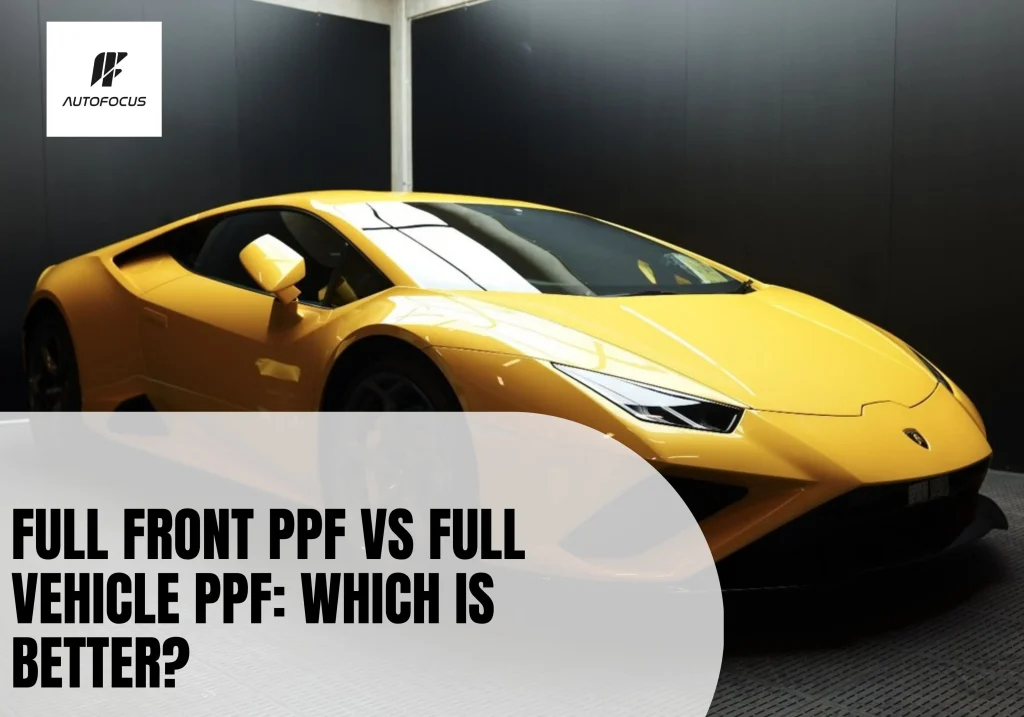
When weighing up full front PPF vs full vehicle PPF, the better fit usually comes down to ownership goals. Full front coverage targets the panels that wear the brunt of road damage, while full vehicle PPF extends protection across the entire painted exterior.
For owners researching paint protection film, understanding coverage levels is just as important as selecting the right film brand. Prestige and exotic vehicle owners often choose broader coverage to help maintain factory paint condition over the long term.
What Is the Difference Between Full Front PPF and Full Vehicle PPF?
Most owners have a general idea of what paint protection film does. The bigger question is understanding how coverage levels differ and which parts of the vehicle remain uncovered.
What Does Full Front PPF Typically Cover?
Most full-front packages include the bumper, bonnet, front guards, mirrors, and, in some cases, the headlights. These surfaces are constantly exposed to debris, loose stones, and contaminants encountered during everyday driving.
Owners considering partial protection often compare coverage levels alongside PPF protects against scratches, chips and UV damage to determine whether targeted protection meets their needs.
What Does Full Vehicle PPF Cover?
Full vehicle PPF extends that same protection to every painted exterior surface — doors, door edges, rear quarter panels, roof, boot lid, side skirts, and pillars where applicable.
Unlike partial installations, complete coverage ensures no painted panel is left exposed. This approach is especially popular among owners who understand why paint protection film is ideal for black cars, where even minor paint defects become highly visible.
Why Coverage Areas Matter
Damage rarely stays confined to the front of a vehicle. While stone chips often appear first, side panels and rear sections continue accumulating wear from parking mishaps, weather exposure, and daily use.
Which Parts of Your Vehicle Receive the Most Damage?
Understanding where damage actually occurs helps clarify whether targeted or complete coverage makes more sense.
High-Impact Areas Exposed to Road Debris
Few panels work harder than the bumper, bonnet, guards, and mirrors when it comes to taking the first hit from loose debris travelling at speed.
For drivers who regularly travel on highways, understanding how paint protection film performs in Sydney’s heat and harsh road conditions can help determine the right protection package.
Areas Often Overlooked by Vehicle Owners
Many owners focus on the front bumper and bonnet while overlooking the rest of the bodywork.
Doors, pillars, roof sections, and rear quarters gradually accumulate scratches, contamination, and UV-related wear. These areas often become the deciding factor when choosing between partial and complete coverage.
How Driving Conditions Influence Paint Damage
Motorways, city parking, coastal environments, and gravel roads all expose vehicles to different forms of paint damage.
Owners living near the coast often benefit from understanding PPF yellowing causes and solutions when selecting long-term protection products.
Is Full Front PPF Enough for Most Vehicle Owners?
For many drivers, full front coverage provides excellent protection without the cost of wrapping the entire vehicle.
When Full Front PPF Makes Sense
Full front coverage is often suitable for:
- Daily drivers
- Budget-conscious owners
- Highway commuters
- New vehicles needing targeted protection
Many owners researching protection options first ask whether new cars need paint protection film before deciding on coverage levels.
Advantages of Full Front Coverage
Front coverage protects the panels most likely to suffer impact damage while keeping installation costs lower than full-body protection.
Potential Limitations to Consider
Everything behind the protected zone remains exposed.
Door panels collect scratches, side skirts accumulate road contamination, and rear quarter panels continue ageing naturally.
Owners planning long-term ownership often discover that paint protection film can be replaced panel by panel if individual sections become damaged later.
When Is Full Vehicle PPF Worth the Investment?
Some owners aren’t comparing protection levels — they’re deciding how much of the original paint they want to preserve.
Vehicles That Benefit Most from Full Vehicle PPF
Full-body protection is commonly selected for:
- Luxury vehicles
- European prestige cars
- Exotic and supercars
- Collectable vehicles
- Long-term ownership vehicles
Owners of premium marques frequently invest in BMW paint protection film to preserve factory paint quality and maximise resale appeal.
Long-Term Benefits of Complete Coverage
Full vehicle protection provides:
- Consistent paint condition
- Easier maintenance
- Better long-term presentation
- Improved resale appeal
Many owners complement full-body PPF with ceramic coating to improve gloss and simplify maintenance.
Why Many Luxury Vehicle Owners Choose Full Coverage
Factory finishes on prestige vehicles can be difficult and expensive to replicate once damaged.
This is why owners often compare graphene vs PPF before choosing a comprehensive protection strategy.
Full Front PPF vs Full Vehicle PPF: Which Offers Better Long-Term Value?
The cheapest option upfront isn’t always the most economical over the entire ownership period.
Comparing Upfront Investment vs Long-Term Protection
While full front PPF costs less initially, unprotected areas may still require correction, polishing, and repair later.
Many owners evaluating value also compare PPF vs ceramic coating to understand the strengths of each solution.
Ownership Goals That Influence Value
Consider:
- Ownership duration
- Driving frequency
- Parking conditions
- Vehicle value
- Resale goals
Factors Worth Considering Before Choosing Coverage
The right package depends on how the vehicle is used and how important factory paint preservation is to the owner.
Full Front PPF vs Full Vehicle PPF for Luxury and Exotic Cars
Luxury and exotic vehicles bring different considerations than everyday commuter cars.
Why Factory Paint Preservation Matters
Original paint often contributes directly to resale value.
Owners seeking maximum preservation frequently choose premium PPF wrap materials combined with complete vehicle coverage.
Protection Considerations for High-End Vehicles
Minor damage on a prestige vehicle often leads to significantly higher repair costs.
This is one reason many owners trust certified car wrapping specialists for luxury cars rather than general installers.
Choosing Protection Based on Vehicle Use
Daily-driven luxury vehicles may have different protection requirements compared with weekend or collector vehicles.
Paint Protection Film Installation in Sydney: Choosing the Right Coverage for Your Vehicle
Selecting the right installer matters just as much as selecting the right coverage package.
Factors Sydney Drivers Should Consider
Road conditions, motorway use, coastal exposure, and parking habits all influence paint deterioration.
How Professional Assessment Helps
Working with experienced professionals ensures protection recommendations align with your vehicle, usage patterns, and long-term ownership plans.
Many owners start by consulting Autofocus Solution’s premium detailing team to determine which package best fits their goals.
Still Not Sure Whether Full Front or Full Vehicle PPF Is Right for Your Car?
Vehicle value, driving habits, ownership plans, and paint preservation goals all shape the decision.
Get Expert PPF Advice From Autofocus Solution
Whether you’re considering paint protection film, comparing PPF vs ceramic coating, or evaluating complete vehicle coverage, professional advice can help ensure you choose the right protection package from the start.
Book a consultation with Autofocus Solution to discuss your vehicle, driving environment, and long-term ownership objectives.