
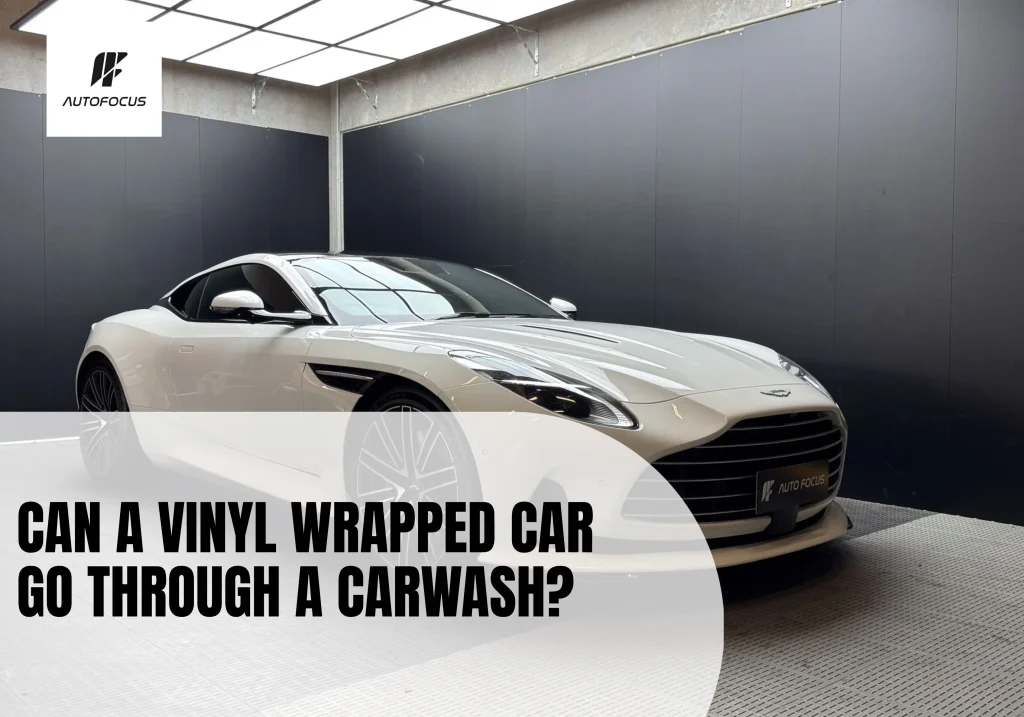
Plenty of wrapped cars around Sydney are quietly taking damage every single week. And the frustrating part is, most people do not realise the damage straight away. Week after week, wrapped cars go through automatic washes and come out looking fine at first, even while the film is slowly getting worn down.
Look, a vinyl wrap is a serious investment. Whether it’s protecting the factory paint on a prestige vehicle or transforming the colour of a daily driver, the last thing any owner wants is to watch that investment degrade because of a washing routine. The good news is that caring for a wrapped car properly is not complicated—but it does require knowing which habits are safe and which ones are doing real damage.
Can a Vinyl Wrapped Car Go Through a Carwash? Here Is the Truth
The Short Answer
Sort of, but it really depends on how the car’s being washed. Some wash methods are far less risky than others, while some are just bad news for wrapped cars. Want the honest version? If you care about keeping the wrap looking sharp, there’s one type of wash you should avoid altogether.
Why the Type of Car Wash Matters More Than You Think
Vinyl wrap is a thin polymer film that bonds directly to your car’s painted surface. The film is engineered to move with the car’s body, which is exactly what makes it so effective as protection. But that flexibility has a catch. Vinyl film is more sensitive to heat, harsh chemicals, and abrasion than bare paint. So washing it the same way you’d wash an unwrapped car is honestly where most owners start doing damage without even realising it.
Thinking of it like bare paint is the first mistake most owners make. A vinyl wrap carwash decision is not just about getting the car clean. It is about understanding what the wash process actually does to the film at a surface level.
Not All Car Washes Are Created Equal for Wrapped Cars
Automatic Brush Car Washes: The Biggest Threat to Your Wrap
Automatic brush car washes are, without question, the worst possible option for a wrapped vehicle. They look soft enough, but those spinning brushes put real physical stress on the film with every pass. And that adds up fast.
Research backs this up, too. Polymer films like vinyl wrap have real mechanical limits, and those limits get pushed hardest under repeated, uncontrolled abrasive contact, which is exactly what brush systems put them through every single time. Cyclic abrasive loading (exactly what happens every time a wrap passes through a rotating brush system) causes progressive micro-damage that accumulates with each wash. The damage is not always visible after a single visit. It builds quietly until the wrap looks dull and covered in fine swirl marks that no polish will fix.
To put it simply, stay away from brush car washes. Full stop.
Touchless Car Washes: Safer, But Still Not Risk-Free
Touchless car washes are a step up. No brushes is already a step in the right direction. But the cleaning agents used in touchless systems are often harsh enough to quietly wear down the film over time. Think dulled finishes, weakened adhesive, and edges that start to lift around curves. These setups really aren’t designed for wrapped cars. A one-off wash probably won’t cause drama, but keep doing it regularly, and the wear starts to show. Slow at first, then all at once.
Hand Washing: The Gold Standard for Wrapped Cars
Hand washing gives full control over water pressure, chemical choice, and contact force. A two-bucket method using a pH-neutral, wrap-safe shampoo applied with a clean microfibre mitt will clean the car thoroughly without putting meaningful stress on the film. This is the gold standard—and for good reason.
These Vinyl Wrap Carwash Habits Are Quietly Destroying Your Wrap
High-Pressure Water Jets
There is a threshold when it comes to water pressure and vinyl wrap. Too much pressure and the water will work its way under the edges, especially around mirrors, door handles, and bumper lines. That’s how delamination starts. Keep a pressure washer at least 30 centimetres back and never aim it straight at an edge. But honestly, a basic garden hose with a trigger nozzle does the job just fine and takes all the guesswork out of it.
Harsh Chemical Detergents
Most people don’t think twice about this one. That cleaner sitting in your garage? It’s probably doing more harm than good on a wrapped surface.
Those commercial wash bays are regulated for good reason. The chemicals used in commercial wash bays are industrial-strength. Regulated, in fact, because the runoff is genuinely toxic to local waterways. And if that’s what they do to a drain, it’s worth thinking about what repeated exposure is doing to your wrap’s finish.
So they’re not exactly gentle by design. The critical point for wrap owners is this: those formulations are engineered for aggressive cleaning performance, not surface compatibility. Used on a cast vinyl or urethane-based film, they will attack the top coat, strip any protective layer, and accelerate colour fade—invisibly, for months, before the damage becomes obvious. Stick to pH-neutral detergents formulated specifically for vinyl or paint protection film.
Abrasive Brushes and Dirty Cloths
Even during hand washing, the wrong cloth causes real damage. A dirty sponge dragged across a wrap is essentially sandpaper at low speed. Always use a clean microfibre mitt, rinse it frequently, and never wipe down a wrapped panel with a dry cloth. Dry wiping is one of the most common and most avoidable causes of fine scratching on wrapped cars.
The Right Way to Wash a Wrapped Car Without Lifting a Corner
Responsible car washing guidance from Riverina Water recommends trigger nozzle hoses, bucket washing, waterless car wash products, and low-flow rinsing—all of which align precisely with best-practice vinyl wrap carwash care. Here is a routine that protects the film and gets the job done properly:
- Start with a trigger nozzle rinse to shift loose dirt before anything touches the surface.
- Work panel by panel from top to bottom using the two-bucket method with a pH-neutral wrap shampoo.
- Rinse off with low-pressure water. And keep the spray well clear of wrap edges.
- Pat dry with a clean microfibre towel. Never wipe.
- Avoid washing in direct sunlight. Water spots form quickly on film surfaces in Australian summer conditions.
For light dust between full washes, a wrap-safe waterless car wash product is a practical solution. Always apply to a cool surface.
Why Proper Car Wrap Maintenance Goes Beyond What You Can Do Yourself
Home washing only gets you so far. Under Stage 2 restrictions, what you’re actually allowed to do is pretty limited already—trigger nozzle, bucket, compliant pressure unit. That’s it. And even on a good day, the driveway just isn’t set up for the kind of controlled, chemistry-specific wash that a wrap genuinely needs to stay in top shape.
A professional detailing facility operates without those constraints. Looking after a wrap properly takes more than the odd wash. Small issues like lifting edges, tired adhesive, or tiny bubbles can seem harmless at first. But leave them too long, and the repair bill climbs fast. Final advice? A bucket and a good mitt cannot do any of that.
Give Your Wrap the Professional Care It Actually Deserves
After everything covered here, the takeaway is simple: a vinyl wrap is too significant an investment to leave to chance—or to the closest drive-through on a Saturday morning.
At Autofocus Solution, protection isn’t just a service. It’s what drives everything we do. We work with brands like STEK, SunTek, CarPro, and Gtechniq because they’re genuinely the best in the business. And that same standard doesn’t stop at installation. The knowledge behind every wrap we fit is exactly what drives how we maintain them.
Whether you need a proper detail, a close look at the edges, or help with keeping that finish in top condition, we’re here to help. So, if you’d rather talk it through, visit our Banksmeadow workshop or book a no-obligation consultation. Time to give your wrap the care it genuinely deserves.