
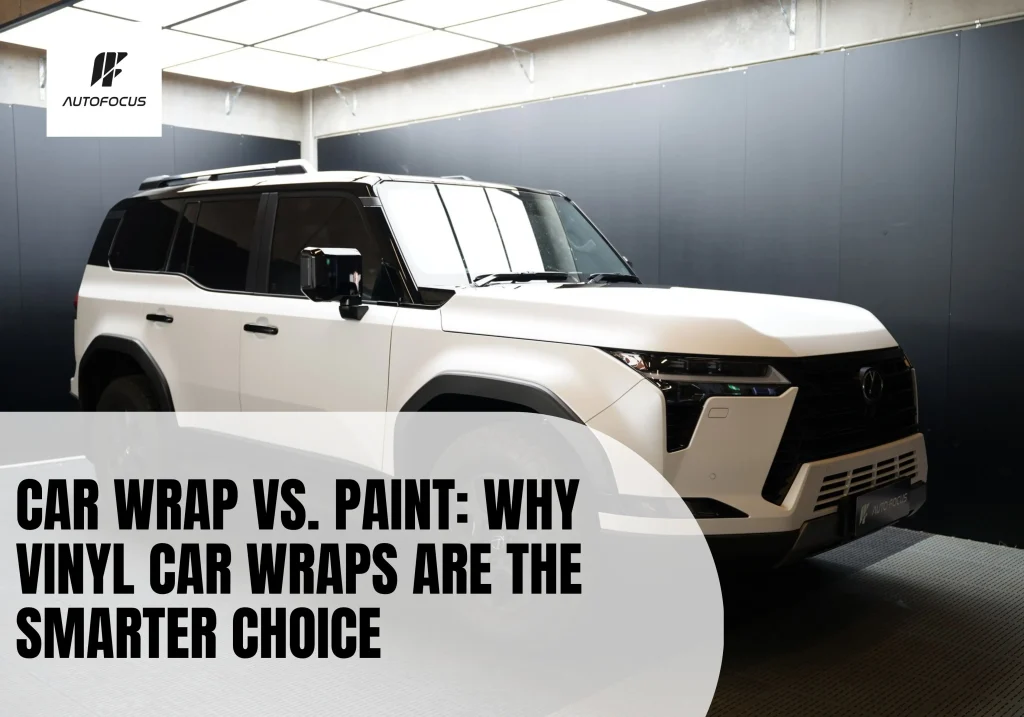
Your paint might still look great, but that doesn’t mean it isn’t wearing down. In Sydney, UV, road grime and salty coastal air can slowly chew through the finish before most owners really clock it. So if you’re looking at refreshing the look or protecting the paint, it’s worth thinking past the cheapest fix first. Seems minor now, but it can cost you more later. And once you compare the real differences properly, the better path starts to look pretty clear.
View this post on Instagram
Paint Job or Vinyl Wrap? What Your Detailer Isn’t Telling You
How Traditional Car Paint Works
Factory automotive paint isn’t just one layer slapped on for looks. It’s a carefully engineered system built from four distinct layers: an e-coat for corrosion resistance, a primer surfacer for chip protection, a basecoat for colour and visual effect, and a clearcoat on top to deliver gloss and UV resistance.
That clearcoat does a lot of the heavy lifting. It’s the first line of defence against every environmental assault your car encounters. And once it degrades—through UV exposure, harsh weather, or the slow grind of daily driving—the layers beneath start to suffer too. Peeling, fading, cracking. Not a good look on a vehicle that’s meant to turn heads.
What Is a Vinyl Car Wrap?
It’s a tough vinyl layer applied over your car’s original paint, not painted on. Simple idea, but it makes a real difference. But the job itself is pretty exact. First comes proper prep, then each section is carefully shaped with heat and trimmed neatly around lights, handles, and every awkward edge.
According to automotive journalist David Morley writing for CarsGuide, a quality full wrap typically costs between $3,000 and $6,000 and can be completed in roughly two to three days. Wraps generally last five to seven years, with longevity tied to maintenance—hand washing is strongly recommended, as is keeping the car out of direct sunlight where possible. When the wrap reaches the end of its life, it’s removed to reveal the original factory paint underneath, preserved in the same condition it was when the wrap went on. A significant advantage at resale.
One honest caveat: vinyl wrap cannot hide existing panel damage or surface imperfections. Get any panel repairs sorted first, before the wrap goes on. A decent installer will tell you that straight away, because why cover damage only to deal with it later?
Car Wrap vs. Paint: Which One Actually Protects a Premium Vehicle?
Why the Cheapest Option Isn’t Always the Most Cost-Effective
Look, it’s tempting to compare the two purely on sticker price. A basic respray and a vinyl wrap can sit in a similar ballpark, and plenty of people stop their research right there. A lower price might look appealing at first, sure, but that doesn’t automatically make it a better value, especially when you’re dealing with a premium car.
A quality wrap preserves the factory paint, protects against daily wear, and can be removed cleanly after several years. A respray, particularly an aftermarket one, introduces a whole new set of variables — and as the science makes clear, not always favourable ones.
The Hidden Costs of a Repaint Most Car Owners Don’t See Coming
Here’s where it gets genuinely interesting. Peer-reviewed research published in the journal Wear (Hernández-Peña et al., 2023) examined how automotive paint coatings perform after exposure to UV radiation and acid rain, all familiar conditions that are part of everyday driving in Australian cities. Paint coatings exposed to both weathering processes showed measurably reduced resistance to solid particle erosion, the kind caused by road debris, airborne grit, and environmental fallout. Wear mechanisms identified in degraded samples included pitting, cracking, ploughing, and flaking—all of which accelerate once the coating has been chemically weakened.
In plain terms: a conventional repaint doesn’t hold up the way most owners expect. The surface begins to be compromised from day one, and the deterioration compounds. When car wrap vs. paint comes down to long-term surface integrity, the science doesn’t favour the respray.
View this post on Instagram
5 Reasons Discerning Owners Are Choosing Vinyl Wraps Over a Repaint
1. Superior Paint Protection Against Australia’s Harsh Climate
Australia has one of the highest UV radiation levels in the world. That environmental reality has serious implications for automotive paint.
Research published in Polymer Degradation and Stability (Smith, Gerlock & Carter, 2001) found that UV light absorber additives in automotive clearcoat and basecoat layers degrade over time through photodegradation. Once those built-in protectants start fading, UV can push deeper into the paint and do real damage below the surface. So then you’re not just dealing with dullness. You’re staring at peeling, cracks, and a much faster coating breakdown.
Factory paint, in other words, has a built-in expiry on its UV protection. Vinyl wrap acts as a sacrificial barrier over that system, absorbing the punishment so the original paint doesn’t have to. For a premium vehicle parked in the Eastern Suburbs or sitting out during a long day in the CBD, that distinction matters enormously.
2. It’s Fully Reversible. Your Original Paint Stays Intact
This is arguably the strongest argument for wrapping over repainting. When a vinyl wrap is fitted properly and looked after, it can be removed cleanly later on, with the original factory paint still preserved underneath. And that matters, because you avoid permanent changes, awkward colour matching issues, and the sort of resale questions buyers always seem to ask.
A respray permanently alters the vehicle’s paint history. For luxury and prestige vehicles, where original factory finish is directly tied to market value, that’s a significant trade-off.
3. Endless Customisation Without Permanence
That’s where wraps really pull ahead. You can go for matte, satin, metallic, colour-shift or textured finishes without stepping into the cost of a full custom paint job, and none of it permanently changes the car. And if your taste changes down the track, no stress. Remove the wrap, refresh the look, or revert to the original colour entirely.
4. Faster Turnaround, Less Downtime
A conventional respray on a quality vehicle can take weeks once prep, application, and curing are factored in. A professional vinyl wrap is typically completed in two to three days. For a daily driver, that difference is very real.
5. Easier and More Affordable to Maintain
Looking after a vinyl wrap is fairly simple, really. Hand wash it with a mild cleaner, skip anything abrasive, and, if you can, try not to leave the car baking in full sun for hours. Why make it harder than it needs to be? And if one section gets marked, you can sort that panel alone. Repainting a damaged section, by contrast, rarely matches surrounding panels perfectly, particularly on older vehicles or complex colours.
The Uncomfortable Truth About How Long a Repaint Actually Lasts
Most people assume a fresh respray gives them a consistent, long-lasting result across the whole vehicle. The science tells a different story.
A 2025 study in Forensic Science International looked at paint systems on eight vehicles and found none were truly uniform from panel to panel. In fact, the paint layers varied in thickness, structure, and chemical makeup across each car. Top surfaces, like the roof and bonnet, showed significantly higher degradation than side panels due to greater direct UV exposure. Aftermarket repaints, common after even minor accident repairs, introduced further inconsistencies that compromised the paint system’s integrity over time.
So when weighing up car wrap vs. paint from a longevity standpoint, a repaint doesn’t deliver the uniform result most owners expect. Certain panels age faster regardless of care. It gives the whole car an even, sacrificial layer, so everything looks consistent. And when you’re ready for a change, the original paint underneath is still there, untouched.
Is a Vinyl Wrap the Right Choice for Your Car?
For most premium vehicle owners, the answer is yes—but context matters.
Vinyl wrap is an excellent choice if the goal is to protect factory paint for resale, refresh the vehicle’s appearance without permanent commitment, or add a genuine layer of UV and erosion protection suited to Australian conditions. It won’t conceal pre-existing panel damage, and the quality of the result depends entirely on the skill of the installer. This is not a job for a bargain-basement operation.
For owners of prestige vehicles who take the condition of their car seriously, a quality wrap applied by an experienced team is, in most cases, the more protective, more versatile, and ultimately more cost-effective decision.
Your Vehicle Deserves Better Than a Compromise. See What’s Possible With Autofocus Solution.
At Autofocus Solution, we treat every vehicle with the precision and care it genuinely deserves. Based in Banksmeadow and serving Sydney’s Eastern Suburbs, we work exclusively with premium brands, such as SunTek, STEK, CarPro, and Gtechniq, because the vehicles our clients bring us demand nothing less.
Whether you’re protecting a new prestige vehicle, preserving resale value on a car you’ve invested in, or simply refreshing a look that no longer excites you, our team handles every job with the same meticulous attention to detail. We’ve helped BMW, Range Rover, Tesla, and GR Yaris owners across Sydney make the smarter call—and the results speak for themselves.
The car wrap vs. paint decision doesn’t have to be complicated. Enquire about your free, no-obligation consultation here today. Let’s talk about what’s possible for your vehicle.