
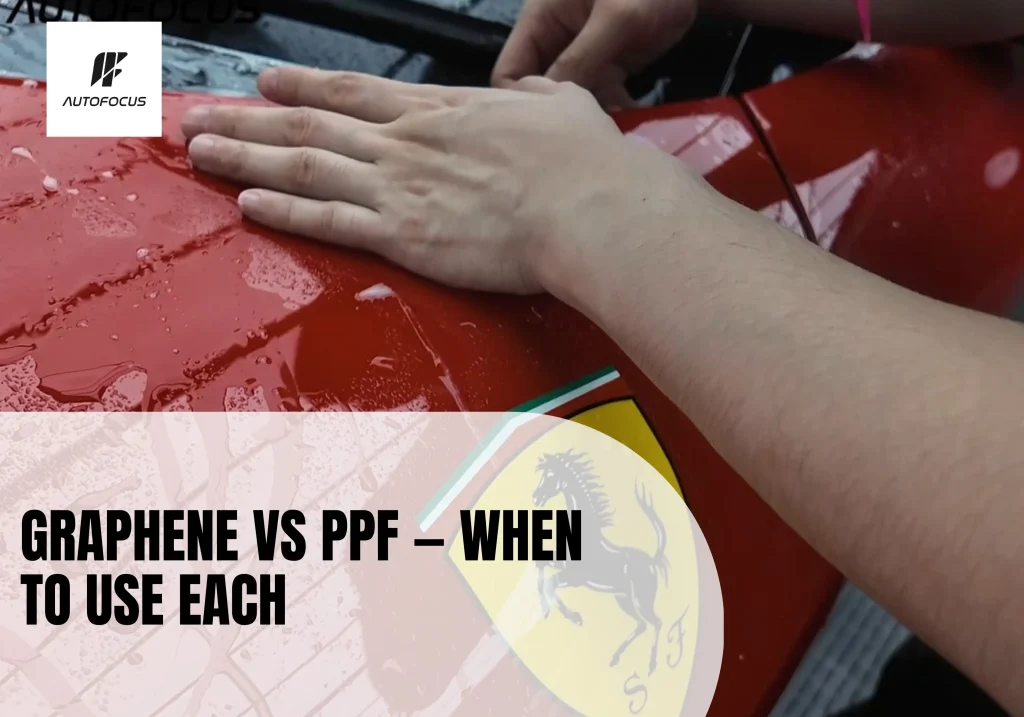
Spending thousands on paint protection only to watch it fail in Australian conditions is every car owner’s nightmare. Even worse? Choosing the wrong solution and realising too late that the expensive protection can’t handle the job it was meant for.
Maybe you’ve been scrolling detailing forums late at night, or hearing completely different opinions from friends. The truth is simple:
Graphene and Paint Protection Film (PPF) both work brilliantly — just for different problems.
The smarter decision isn’t choosing a winner.
It’s matching the right protection to your driving habits, budget, and environment.
What Is Paint Protection Film (PPF)?
The Invisible Shield That Heals Itself
Paint Protection Film is a clear polyurethane film applied over your vehicle’s paint to create a physical barrier against damage.
Modern high-performance PPF includes self-healing technology, meaning light scratches and swirl marks disappear with heat exposure.
Key Benefits of PPF
- Protects against stone chips and gravel
- Prevents scratches and swirl marks
- UV resistant and won’t yellow
- Chemical resistance against bird droppings and tree sap
- Typical lifespan: 7–10 years
- Often backed by manufacturer warranties
If your car faces physical impacts, PPF is engineered to take the hit so your paint doesn’t.
What Is Graphene Coating?
The Science Behind Graphene Protection
Graphene coating is a liquid coating that bonds directly to your paint at a molecular level.
Its standout feature is extreme thermal conductivity, helping disperse heat and protect paint from Australia’s intense sun exposure.
Key Benefits of Graphene Coating
- Superior UV and heat resistance
- Strong chemical resistance (salt, acid rain, pollution)
- Hydrophobic surface (water and dirt slide off)
- Enhances gloss and depth of paint
- Easier car washing and maintenance
- Typical lifespan: 3–5 years
Graphene is designed to fight invisible threats — heat, oxidation, and chemical damage.
Graphene vs PPF: The Key Differences
1. Type of Protection
PPF = Physical Defence
Best against:
- Stone chips
- Road debris
- Scratches
- Gravel impact
- Highway driving damage
Graphene = Chemical & Environmental Defence
Best against:
- UV damage and fading
- Salt and coastal air
- Bird droppings and tree sap
- Pollution and industrial fallout
- Water spotting
2. Durability & Lifespan
| Protection Type | Typical Lifespan |
|---|---|
| PPF | 7–10 years |
| Graphene | 3–5 years |
PPF lasts longer because it’s a thick mechanical barrier, while graphene is an ultra-thin bonded coating.
3. Cost Comparison
- PPF: Higher upfront cost (materials + labour intensive installation)
- Graphene: More affordable initial investment
- Long-term value: Depends on driving conditions and coverage
Choosing purely on price often leads to regret — the real value comes from choosing the right protection for your environment.
When PPF Is the Better Choice
High-Impact Driving Conditions
PPF is ideal if you:
- Drive long highway commutes
- Travel on rural or gravel roads
- Own a performance or luxury vehicle
- Want maximum resale value protection
For vehicles exposed to constant debris, PPF is the safest investment.
When Graphene Is the Better Choice
Urban & Coastal Environments
Graphene shines if your car:
- Lives near the coast (salt exposure)
- Is parked outdoors frequently
- Faces strong UV and heat daily
- Needs easier washing and maintenance
Graphene is perfect for heat, sun, and chemical exposure.
The Best Option? Many Owners Choose Both
Layered Protection Strategy
You don’t always have to choose just one.
A growing number of car owners combine both:
Typical hybrid approach:
- PPF on high-impact areas (bonnet, bumper, mirrors, door edges)
- Graphene coating over the entire vehicle
Why this works
- Film absorbs physical damage
- Graphene protects against UV, salt, and chemicals
- Maximum protection + easier maintenance
- Best long-term paint preservation
If budget allows, this is the ultimate paint protection setup.
How to Choose the Right Paint Protection
The right decision depends on:
- Driving habits
- Parking conditions
- Vehicle value
- Budget
- Local environment
What works perfectly for a city commuter may fail for a long-distance driver.
Professional installation also plays a major role. Even the best product performs poorly if applied incorrectly.
Final Thoughts
Choosing between graphene and PPF shouldn’t be rushed or based purely on price. Both technologies excel — just in different ways.
Quick summary:
- Choose PPF for impact protection and long-term durability
- Choose Graphene for UV, heat, and chemical resistance
- Choose both for maximum long-term paint protection
If you want protection that actually matches how you drive and where you live, a tailored recommendation will always deliver better results than a one-size-fits-all solution.